
Gaza's Agricultural Crisis: How Destroyed Farmland Created a Starvation Crisis
Over 80% of Gaza's farmland destroyed. Livestock, trees, and food systems have been severely damaged, forcing over 1.9 million people into extreme hunger. Learn what caused the man-made crisis and how you can help.
Al-Ihsan Foundation
Humanitarian Aid Team
Key Takeaways
- Understanding the scale of agricultural destruction in Gaza
- How destroyed farmland leads to forced starvation
- The numbers behind Gaza's food security crisis
- What remains of Gaza's agricultural capacity
- How your support can provide immediate relief
Gaza's Agricultural Crisis: How Destroyed Farmland Created a Starvation Crisis
What Happens When 80% of Farmland is Destroyed? This isn't just a food shortage, it's forced starvation. In Gaza, families aren't just hungry. They've lost orchards, wells, greenhouses, everything they once grew food with. Only limited farmland remains cultivatable. What do you feed your child when nothing grows anymore?
This Is Not Just Hunger. This Is Forced Starvation.
In Rafah, a father stands on the dry, broken earth of what used to be his tomato farm.
"I didn't just lose tomatoes," he says. "I lost the only way I knew how to feed my family."
Over nineteen months into the siege, Gaza's food system has collapsed. Families are starving because their cropland, wells, livestock, and access to aid have been deliberately and systematically destroyed by the occupying forces.
Gaza's Starvation Crisis by the Numbers
According to the UN's latest food security report (IPC, July 2025), every single person in Gaza is now facing crisis-level hunger or worse:
Food Security Crisis Levels
Phase 5: Catastrophe
470,000 people at risk of starvation
Phase 4: Emergency
Over 1 million people in emergency
Phase 3: Crisis
500,000 people in crisis
These are families, children, elders and babies
Cropland: What's Left to Farm?
Before the siege, agriculture supported over 560,000 people through farming, herding, or fishing. Today, that lifeline is nearly gone.
Gaza's Farmland Status (FAO/UNOSAT, April 2025)
Completely unusable for agriculture
Undamaged and accessible
Why Gaza Can't Feed Itself
Food availability has been deliberately cut off:
Systematic Destruction of Food Systems
Most of Gaza's food supply has been deliberately destroyed.
What You Can Do: Send a Vegetable Pack
One $75 vegetable pack can feed a family with:
Essential Vegetables for Survival
Full of vitamin C and lycopene for immunity
Hydrating, mineral-rich, gentle on digestion
Packed with folate for mothers & children
High in fibre, antioxidants, and plant protein
Gaza's supergreen: rich in iron
These vegetables are a means of survival.
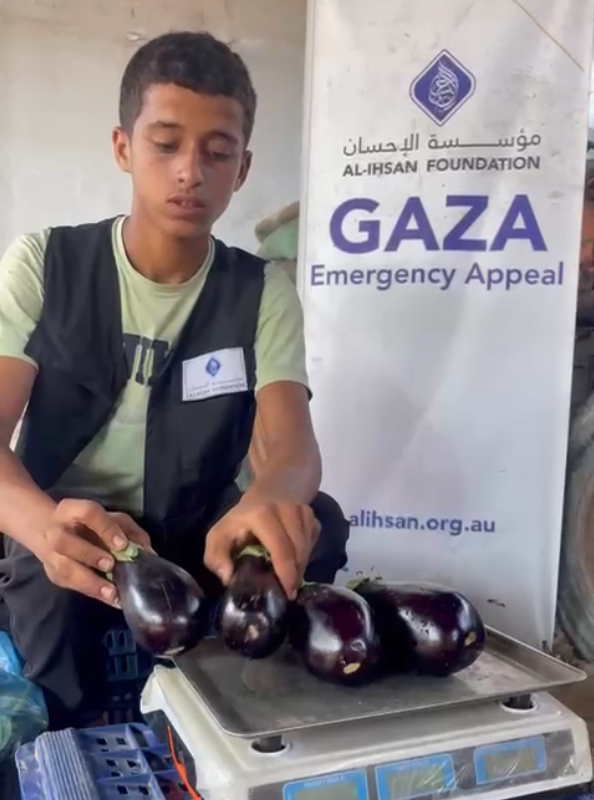
Our teams in Gaza are sourcing what can be found and delivering fresh vegetables directly to families. Read how it's happening.
Final Reflection: Hope Grows When the Ummah Responds
Forced starvation is a weapon, and it's being used against Gaza's people.
But hope still grows when the ummah responds. When we give, we push back against despair. We restore dignity. And we remind every person in Gaza that they have not been forgotten.
Send food. Send relief. Send dignity.
Because every vegetable pack is a lifeline for a family in Gaza.
Frequently Asked Questions
Stay Informed
Stay Connected and Inspire Change with Al-Ihsan
Stay connected, inspire meaningful change, and support compassionate community efforts through Al-Ihsan.