Gaza's Amputation Crisis: What Recovery Really Takes
Indiscriminate bombing and blocked aid drive amputations in Gaza. See what recovery needs and how our Gaza Mobile Clinic delivers care.
Al-Ihsan Foundation
Humanitarian Aid Team
Key Takeaways
- Over 6,500 people need prosthetic and rehab support, most are children
- 225% increase in amputations since the oppression began
- $105 treats three people a day, $7,000 funds a full clinic day
- Mobile Medical Clinic delivers care directly to families in shelters
- Recovery requires clean dressings, infection control, and psychosocial support
What is Happening in Gaza right now?
Indiscriminate bombing has destroyed homes, hospitals and roads; many doctors and nurses have been killed or detained, and aid is restricted, leaving thousands severely injured.
This is a destruction problem. Hospitals and clinics have been hit or forced out of service. Roads are damaged. Ambulances are blocked or delayed. Families live in crowded shelters with little clean water or power. In this reality, survivors of blast injuries often lose limbs, and then face a long road to heal.
$105 treats three people a day.
$7,000 funds a full clinic day - up to 250 patients.
Why are Amputations Rising?
Catastrophic blast injuries plus delayed treatment. Damaged facilities, unsafe roads and restricted supplies push more cases to limb loss or re-amputation.
Amputations in Gaza have increased because of more bombings. which leads to severe explosive injuries (shrapnel and crush wounds) and delayed treatment, damage to hospitals, roads and medical supply lines then makes those injuries far more likely to end in limb loss or re-amputation.
Breakdown (cause → effect):
Direct cause:
Explosive blast injuries destroy blood vessels, nerves and bone, so limb-saving surgery is often impossible.
Delayed care:
Damaged hospitals, unsafe roads and fewer clinicians mean late operations and gaps in follow-up.
Infection risk:
Crowded shelters, scarce clean water and limited sterile supplies turn small wounds into serious infections.
Knock-on effects:
Without steady dressings and early physio, complications can rise, including re-amputation.
What Does Safe Recovery Need?
Clean dressings, infection control, pain relief, stump care, early movement and psychosocial support, repeated through short follow-ups.
Recovery after amputation is a step-by-step process:
Clean wound care:
regular dressing changes, infection checks, suture removal.
Pain management:
steady, stepped pain relief - not a single tablet.
Stump care:
gentle cleaning, protection and shaping for a future prosthesis.
Early movement:
simple physio to keep joints from stiffening and protect mobility.
Psychosocial support:
calm tools for fear, sleep and stress - especially for children.
Follow-ups:
small visits repeated overtime do more than one long appointment.
How does our Mobile Medical Clinic deliver this care?
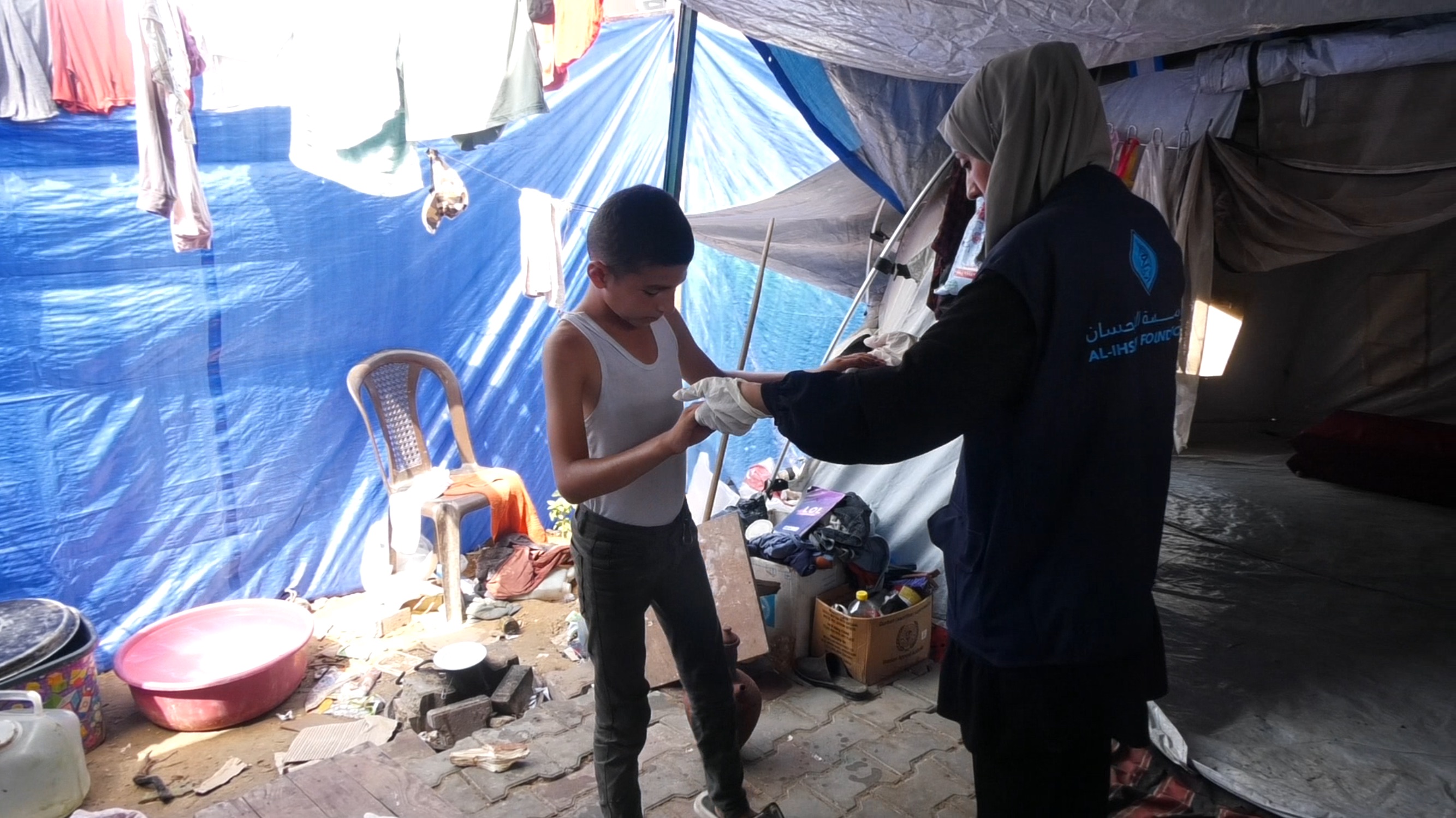
When hospitals are hit or overwhelmed, we take care to families- shelters, tent communities and damaged homes, through local doctors and nurses.
What we deliver
-
Wound cleaning & safe dressings
-
Suture removal & infection checks
-
Pain and fever management
-
Stump care & early physio guidance
-
Psychological first aid for patients
How we operate
-
Open daily in South Gaza where access allows
-
Staffed by local doctors and nurses, trusted, dignified care
-
Up to 250 patients a day when supplies and security allow
-
$7,000 runs one clinic day; $105 helps treat three people
What $7,000 covers: staff costs, sterile dressings, basic medicine, basic diagnostics and fuel for one day.
Why aren't Prosthetics the First Step?
Most people aren't ready until wounds are closed, pain is controlled, and the stump is shaped, basics the mobile clinic can support.
Rehab and prosthetics centres have been damaged and disrupted, and stock is limited. Even when a centre re-opens, prosthetic fitting comes after safe wound care, pain control and stump preparation. Getting this right early prevents complications and makes later fitting safer, faster and less painful.
Key facts at a glance
Health system hit: Hospitals and clinics bombed; roads damaged; power unstable.
Health workers targeted: Many doctors and nurses killed, injured or detained.
Rising amputations: 6,500+; Gaza has the highest number of child amputees per capita.
Aid restricted: Medicines, dressings, antibiotics and fuel often delayed.
Why it matters: Without early wound care and follow-up, people face infection, re-amputation and possble lifelong health issues.
Amputations & long-term harm
Ongoing attacks and aid restrictions by the occupying forces continue to cause mass casualties, starvation, and long-term disabilities, especially in children.
Over 6,500 people need prosthetic and rehab support. Most are children
The Director of Hamad Rehabilitation & Prosthetics Hospital reported a 225% increase in amputations since the oppression began.
"The believers, in their mutual love, mercy and compassion, are like one body; when one limb suffers, the whole body responds with wakefulness and fever."
- Bukhari
Please Help Fund the Gaza Mobile Clinic
Urgent Call to Action
Donate Now to keep the Gaza Mobile Clinic running, and give people the best chance at healing, in shaa' Allah.
Help Fund the Gaza Mobile Clinic
Together, we can bring hope and healing to Gaza's children. Your support matters more than ever.
Frequently Asked Questions
Stay Informed
Stay Connected and Inspire Change with Al-Ihsan
Stay connected, inspire meaningful change, and support compassionate community efforts through Al-Ihsan.