How Gaza's Water Crisis is Affecting Children
Children are among those most at risk when safe water is scarce. Learn how Gaza's water crisis is affecting children's health, hygiene and nutrition, and why access to safe water matters.
Al-Ihsan Foundation
Humanitarian Research Team
Key Takeaways
- Children are more at risk of dehydration and illness when safe water is scarce
- Unsafe water and poor sanitation raise the risk of diarrhoea and infection
- Too little water makes bathing, handwashing and cleaning harder
- Babies and young children face added risks with feeding and hygiene
- For 1.1 million children in Gaza, access to water remains uncertain
Why Do Children in Gaza Need Safe Water?
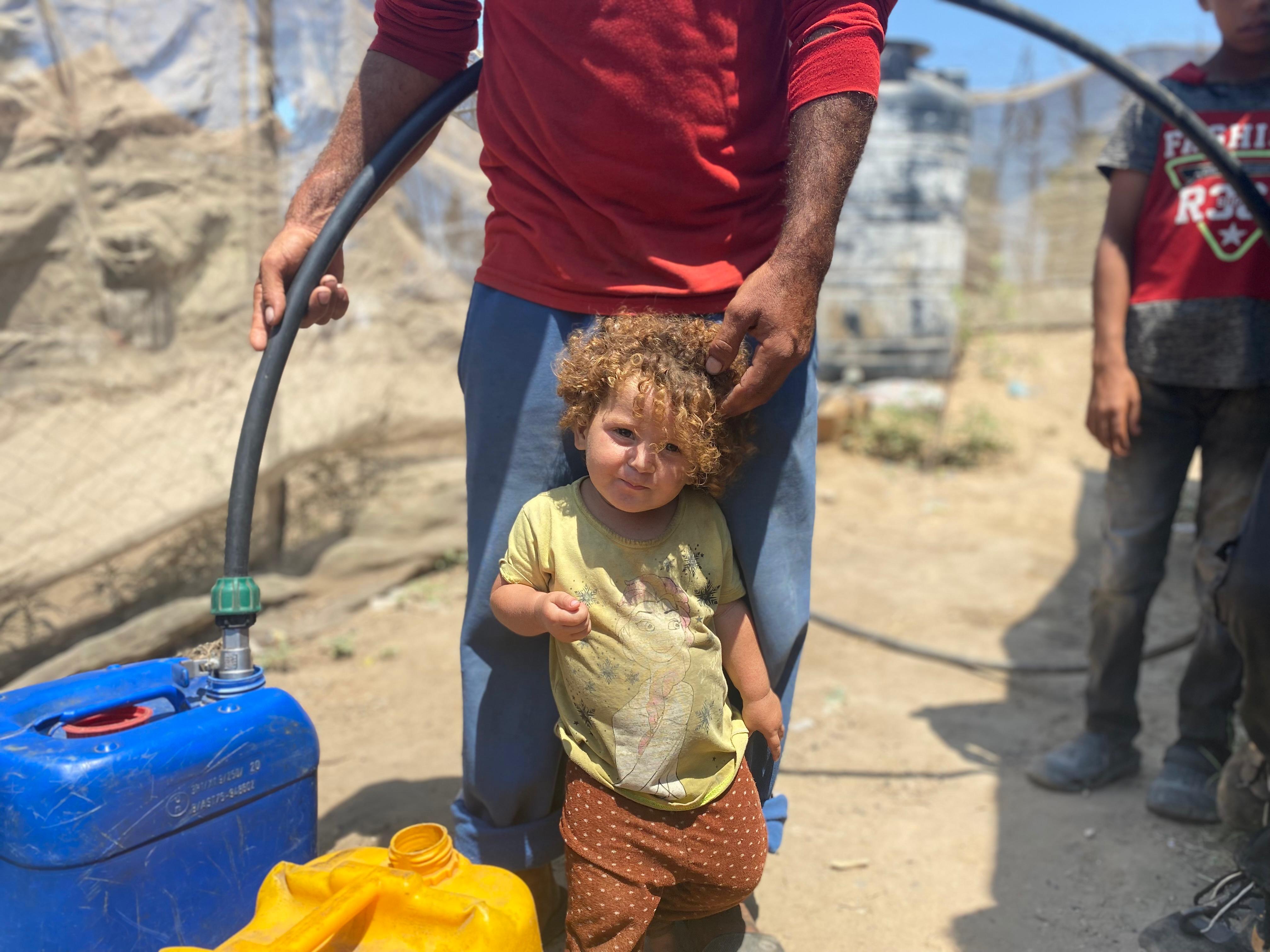
Safe water is part of almost every part of a child's day.
They need it to drink, while the people caring for them need it to prepare food, wash their hands, bathe them and keep the things around them clean.
When that water is scarce or unsafe, the risks grow. Children are more vulnerable to dehydration, diarrhoea and infection, and babies and young children can become dehydrated much faster than adults.
Something as ordinary as water becomes tied to almost every part of keeping a child well.
What Happens When There Isn't Enough Water?
When a family has only a small amount of water, it has to stretch across the whole day.
Drinking comes first, but the other needs do not disappear. Children still need to be washed. Hands need to be cleaned. Clothes and bedding get dirty, and feeding items still need to be kept clean.
For families living in crowded displacement sites, these are not small concerns. Having too little water can make it much harder to keep children clean and reduce the risk of illness.
How Does Unsafe Water Affect Children's Health?
When safe water is scarce and sanitation breaks down, the risk of illness grows, and recent health data from Gaza shows how serious that risk has become.
- •Water contamination: The share of tested water samples showing contamination rose from under 6% in January to over 18% in August 2026.
- •Diarrhoea: Over the same period, cases of acute watery diarrhoea nearly doubled.
- •Skin disease: In August, 29.5% of reported communicable diseases were skin diseases.
- •Other infections: Respiratory infections remained widespread, while acute jaundice syndrome was also rising.
These figures cover reported illness across Gaza, not children alone. For babies and young children, diarrhoea can be especially dangerous because they can become dehydrated quickly.
Source: WHO, UN, OCHA, September 2026
How Are Unsafe Water and Malnutrition Connected?
The effects of unsafe water can go beyond making a child sick.
When a child has diarrhoea, they can lose water and nutrients, eat less and have a harder time taking in nutrients from food. If that child is already malnourished, their body may also have a harder time fighting infection.
This can create a harmful cycle: illness can make malnutrition worse, while malnutrition can make it harder for a child to recover from illness.
Safe water alone cannot treat malnutrition, but it is an important part of a child's recovery, alongside food, sanitation and healthcare.
Why Is Safe Water Important for Babies?
Babies rely on adults for every part of their feeding and care. Safe water is part of that care.
- •Feeding: Safe water is needed to prepare powdered infant formula safely when it is used.
- •Cleaning: Safe water is needed to wash hands and clean feeding equipment.
- •Hygiene: Water is needed to wash babies, clothes and everyday items.
- •Dehydration: Babies and young children can become dehydrated quickly when they have diarrhoea.
When safe water is scarce, these everyday parts of caring for a baby become much harder.
Help Provide Water for Children and Families in Gaza
Through trusted local partners inside Gaza, Al-Ihsan Foundation is helping deliver water to children and families. Donations help these water distributions continue.
To learn more about where Gaza's water comes from, why access remains so limited and the wider water crisis, read our Gaza Water Crisis guide.
$150 helps deliver 1,000 litres of water, reaching up to 20 households based on our distribution estimates.
Provide Safe Water for Gaza
Donate NowFrequently Asked Questions
Stay Informed
Stay Connected and Inspire Change with Al-Ihsan
Stay connected, inspire meaningful change, and support compassionate community efforts through Al-Ihsan.