What is Life like Inside the Rohingya Refugee Camps?
Explore daily life inside the Rohingya refugee camps in Bangladesh. Learn about overcrowded shelters, food insecurity, education challenges, hygiene concerns, and how Al-Ihsan Foundation is helping vulnerable families.
Al-Ihsan Foundation
Humanitarian Aid Team
Key Takeaways
- The Forgotten Faces of Rohingya Refugees
- What Did Our Team See Inside the Rohingya Refugee Camps?
- What Do Rohingya Homes Look Like?
- What Challenges Do Children Face Growing Up in the Camps?
- How Do Families Access Food, Water and Daily Essentials?
- Why Are Hygiene and Sanitation Major Concerns?
- How Is Al-Ihsan Foundation Supporting Rohingya Families?
- How Can You Help Rohingya Families Today?
The Forgotten Faces of Rohingya Refugees
More than 1.5 million Rohingya refugees live in camps across Cox's Bazar, Bangladesh. But what does daily life actually look like inside the world's largest refugee settlement?
During a recent visit, Al-Ihsan Foundation's team walked through the camps, entered family homes, met orphans, and witnessed firsthand the realities of daily life inside one of the world's largest refugee settlements.
The Rohingya are not just "refugees"; they are people with a rich culture, deep faith, and an incredible will to survive.
Many Rohingya families have spent years living without a recognised nationality, uncertain about when or whether they will be able to safely return home. Yet, walking through the narrow, dusty paths of the camps, you don't just see hardship; you see resilience.
You see it in the makeshift schools where children continue to learn despite difficult circumstances. You see it in the communal kitchens where families share what little they have. You see it in the patience of mothers, the determination of fathers, and the hope of young people striving for a better future.
They are not simply survivors. They are people with dreams, memories of their ancestral farms in Rakhine State, and a deep desire to care for their families and live with dignity.
Behind every statistic is a person trying to rebuild life after displacement.
During our visit, we did not simply meet refugees.
We met our brothers and sisters.
What Did Our Team See Inside the Rohingya Refugee Camps?
The first thing that stands out is the scale.
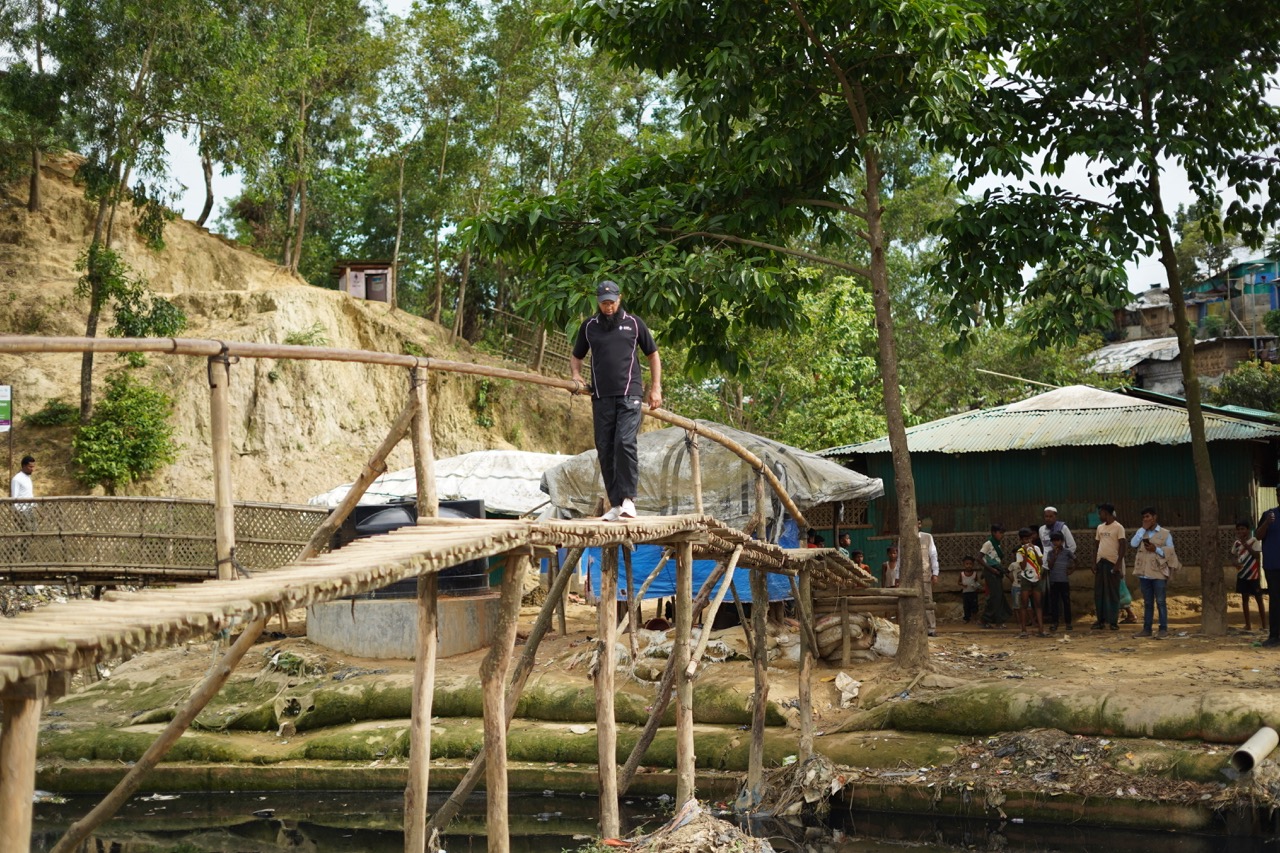
Our team passed narrow pathways lined with bamboo shelters covered in tarpaulin.
Shelter after shelter stretches across the hillsides.
Narrow pathways weave through densely populated communities.
Children walk between homes.
Mothers carry water containers.
Small market stalls sell basic essentials.
The camps feel like a city built from bamboo.
Every available space has been carefully used to accommodate families who arrived with little more than what they could carry.
Yet despite the hardship, daily life continues.
People greet one another.
Children laugh and play.
Families prepare meals.
Life moves forward.
What Do Rohingya Homes Look Like?
One of the most powerful moments during our visit was stepping inside the homes of Rohingya families.
Inside a Four-Metre by Three-Metre Shelter
Many shelters are constructed using bamboo frames, rope, and tarpaulin sheeting.
During our visit, we entered homes measuring approximately four metres by three metres.
In one shelter, seven family members shared the same space.
The room served as a bedroom, living room, dining area, and storage space all at once.
Personal belongings were carefully organised to maximise every available centimetre.
A thin roof provided protection from the heat, rain, and seasonal storms.
Yet for many families, this shelter represents safety compared to the circumstances they fled.
How Families Adapt to Overcrowding
Living in such confined spaces presents daily challenges.
Parents and children sleep side by side.
Privacy is limited.
Studying, cooking, resting, and family life all happen within the same small area.
As families grow and children get older, space becomes even more limited.
Despite these difficulties, families continue to create homes, maintain routines, and care for one another.
What Challenges Do Children Face Growing Up in the Camps?
Nearly half of the Rohingya refugee population are children.
For many, childhood has been shaped by displacement, uncertainty, and limited opportunities.
Meeting Children and Orphans During Our Visit
As our team walked through the camps, children gathered along the pathways.
Some smiled.
Some waved.
Others watched quietly with curiosity.
Like children everywhere, they were eager to learn, explore, and connect.
We also met orphans living within the camp community.
Many have experienced tragic loss at a young age.
Yet they continue to show remarkable resilience.
Their hopes are simple.
To learn, play and feel safe.
To have opportunities for a better future.
Education Remains Uncertain
Education remains one of the greatest challenges facing Rohingya children.
Humanitarian organisations estimate that hundreds of thousands of children rely on learning centres operating inside the camps.
Funding shortages have placed many educational programmes under pressure, affecting access to learning materials, teachers, and classroom support.
Without consistent education, an entire generation risks falling further behind.
How Do Families Access Food, Water and Daily Essentials?
Meeting basic needs remains a daily challenge for many families.
Food Assistance Remains Critical
Many households depend on humanitarian assistance to access food.
While food distributions help meet essential needs, ongoing funding shortages place increasing pressure on aid programmes.
For families with limited opportunities to earn income, food support remains critical.
Access to Clean Water Is Not Always Easy
Water points are shared by large numbers of people throughout the camps.
Families often walk to collect water for drinking, cooking, cleaning, and washing.
Although humanitarian agencies have worked extensively to improve access, the sheer population density creates ongoing pressure on water and sanitation systems.
Why Are Hygiene and Sanitation Major Concerns?
One of the most significant challenges we observed was the pressure placed on sanitation facilities.
What Happens When Thousands of Families Share Limited Facilities?
In densely populated sections of the camp, families often rely on shared toilets and communal washing facilities.
With such a large population living in a concentrated area, maintaining sanitation infrastructure requires continuous effort.
Facilities can become overcrowded, particularly during periods of heavy rain and flooding.
How Poor Sanitation Impacts Health
Limited sanitation and hygiene facilities increase the risk of waterborne illnesses and communicable diseases.
Children are particularly vulnerable.
When clean water, hygiene supplies, and sanitation facilities are stretched, even preventable illnesses can spread more easily through communities.
This is why hygiene support remains such an important part of humanitarian assistance.
Why Hygiene Packs Matter
Something as simple as soap, toothpaste, shampoo, sanitary products, and hand sanitiser can help families maintain health, dignity, and wellbeing.
For many households, these items are not luxuries.
They are necessities.
Our Hygiene Packs help families access essential personal care items that support health and hygiene in challenging living conditions.
How Is Al-Ihsan Foundation Supporting Rohingya Families?
Al-Ihsan Foundation is currently on the ground supporting Rohingya refugees through practical humanitarian assistance.
Hygiene Pack
Provides essential hygiene items including soap, detergent, toothbrushes, toothpaste, shampoo, sanitary products, hand sanitiser, towels, and washing supplies.
Food Pack
Provides a month's supply of staple foods for a vulnerable family, helping reduce food insecurity and nutritional stress.
Warm Meals Distribution
Provides freshly prepared hot meals for 30 people through community kitchens operating within Cox's Bazar.
Sewing Machines and Self-Reliance
For many women, a sewing machine represents more than equipment. It creates opportunities to learn skills, generate income, and contribute to household wellbeing. It supports dignity, independence, and hope for the future.
How Can You Help Rohingya Families Today?
When our team left the camps, they did not leave thinking about statistics.
They left remembering people.
The father welcoming us into his bamboo shelter.
Children gathering along the pathways.
Orphans hoping for an opportunity to learn.
The mother caring for her family within a room smaller than many bedrooms.
More than one million Rohingya refugees continue to live with uncertainty every day.
Your support can help provide food, hygiene supplies, warm meals, and livelihood assistance to families who have already lost so much.
Behind every shelter is a family with a story.
"The believers, in their mutual kindness, compassion and sympathy, are just like one body. When one limb suffers, the whole body responds with wakefulness and fever."
Sahih al-Bukhari
The challenges facing the Rohingya community may seem distant to many of us, but as Muslims, their hardship should concern us all. Their struggles remind us that we are part of one ummah, connected through faith, compassion, and our responsibility to care for one another.
Your sadaqah helps restore dignity, strengthen resilience, and remind vulnerable families that they have not been forgotten.
Why Are More Than 1.5 Million Rohingya Refugees Living in Bangladesh?
Our team witnessed the realities of daily life inside the camps, but understanding how the Rohingya crisis began provides important context.
Learn about the history of the Rohingya people, the events of 2017, and the challenges families continue to face today.
Frequently Asked Questions
Stay Informed
Stay Connected and Inspire Change with Al-Ihsan
Stay connected, inspire meaningful change, and support compassionate community efforts through Al-Ihsan.