Why Are More Than 1.5 Million Rohingya Refugees Living in Bangladesh?
Learn about the Rohingya refugee crisis in Bangladesh in 2026. Explore the latest statistics, humanitarian challenges, and how Al-Ihsan Foundation is supporting families in Cox's Bazar, Bangladesh.
Al-Ihsan Foundation
Humanitarian Aid Team
Key Takeaways
- Who Are the Rohingya People?
- What Happened During the 2017 Rohingya Genocide?
- How Many Rohingya Refugees Are Living in Bangladesh in 2026?
- What Challenges Do Rohingya Refugees Face Today?
- Why Are Rohingya Refugees Risking Dangerous Sea Journeys?
- What Is Being Done to Seek Justice for the Rohingya?
- Can Rohingya Refugees Return to Myanmar?
- How Is Al-Ihsan Foundation Supporting Rohingya Refugees?
- How Can You Help Rohingya Refugees Today?
What's on This Page?
In this guide, we'll explore who the Rohingya are, why they were forced to flee their homes, what life looks like inside the refugee camps today, and how you can help support families facing one of the world's longest-running humanitarian crises.
Who Are the Rohingya?
The Rohingya are a Muslim ethnic minority who have lived for centuries in Myanmar (formerly Burma), primarily in Rakhine State. Despite their deep roots in the region, they have been denied citizenship by the Myanmar government since a 1982 law effectively rendered them stateless.
They are often referred to as "the world's most persecuted minority." In Myanmar, they have faced decades of restrictions on their freedom of movement, access to education, and even their right to marry and have children.
What Happened During the 2017 Rohingya Genocide?
While violence against the Rohingya has occurred in cycles (in 1978, 1991, and 2012), the events of August 2017 marked a horrific turning point.
Following attacks by a militant group on police posts, the Myanmar military launched what they called "clearance operations." In reality, these were systematic atrocities.
Over 700,000 Rohingya fled into neighboring Bangladesh within just a few months.
The Horrors: Refugees reported mass killings, the burning of entire villages, and widespread sexual violence.
The Numbers: At least 6,700 Rohingya, including 730 children, were killed in the first month alone, according to Médecins Sans Frontières (MSF).
The Result: The exodus created the world's largest refugee camp in Cox's Bazar, Bangladesh.
How Many Rohingya Refugees Are Living in Bangladesh in 2026?
The Rohingya response remains one of the largest humanitarian operations in the world.
According to updated data from UN agencies and humanitarian partners, and ground reports from the Al-Ihsan Foundation team:
Total Refugee Population: Approximately 1.5 million Rohingya refugees remain in Bangladesh.
Recent Displacements (2024–2026): Around 150,000 additional Rohingya have fled to Bangladesh since early 2024 due to renewed violence in Myanmar.
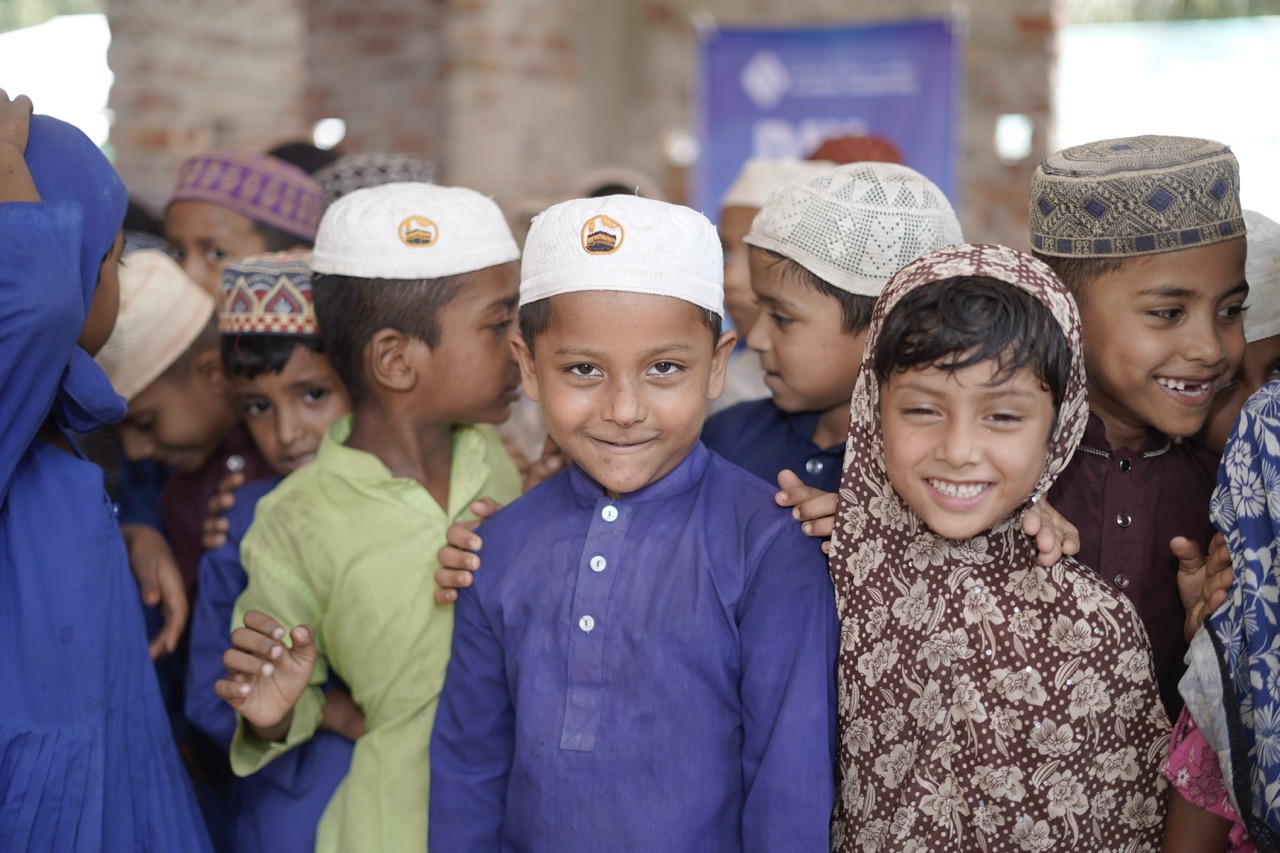
Refugees live across camps in Cox's Bazar, Bangladesh.
Humanitarian Condition: For many families, life remains suspended between intense uncertainty and basic survival.
What Challenges Do Rohingya Refugees Face Today?
Protection and Safety Concerns Increasing
Protection concerns inside the camps remain among the most urgent humanitarian challenges.
Humanitarian organisations report growing concerns related to:
- •Violence
- •Abductions
- •Forced recruitment
- •Exploitation
- •Human trafficking
- •Gender-based violence
Women, children, older people and people living with disabilities are often the most vulnerable.
Funding reductions have also affected protection programs, making it more difficult for humanitarian agencies to identify risks, provide support and maintain safe community spaces.
Without sustained support, these risks continue to grow.
Healthcare Services Under Pressure
Healthcare services across the camps face significant strain.
Humanitarian organisations report that hundreds of thousands of refugees risk losing access to critical healthcare services due to funding shortages. Cholera outbreaks remain a concern, malnutrition rates have increased, and many people living with chronic illnesses struggle to receive consistent treatment.
Women and girls face additional challenges accessing maternal and reproductive healthcare.
Mental health needs are also substantial.
Many refugees have experienced conflict, displacement, family separation and prolonged uncertainty. Yet mental health services remain limited compared to the scale of need.
Children Falling Behind in Education
Education remains one of the greatest concerns for Rohingya families.
Earlier funding cuts affected learning centres serving hundreds of thousands of children and resulted in the dismissal of many teachers.
Although some services have resumed, educational opportunities remain fragile.
Many children continue to learn in overcrowded classrooms with limited materials.
For teenagers, the situation is even more concerning.
Humanitarian agencies estimate that nearly 90 per cent of Rohingya youth lack access to meaningful education or skills training opportunities.
Without education, young people face fewer opportunities, greater vulnerability and increasing mental health challenges.
Climate Change Affects
The camps in Cox's Bazar are highly vulnerable to extreme weather.
Every year, families face risks from:
- •Monsoon flooding
- •Landslides
- •Cyclones
- •Fires
Temporary shelters built from bamboo and tarpaulins can be damaged quickly during severe weather events.
Climate-related disasters can destroy homes, disrupt healthcare services and increase protection risks for already vulnerable families.
Humanitarian agencies continue working to improve resilience, but funding shortages threaten these efforts.
Food Insecurity and Nutrition Crisis
Behind every statistic from the world's largest refugee camp are stories of mothers trying to soothe a hungry child, an elder remembering the home they were forced to leave, and a generation growing up in a world of bamboo and tarpaulin.
Over 95% of Rohingya households rely on humanitarian assistance to meet their basic food needs.
The World Food Program (WFP) has repeatedly warned that funding shortages threaten food assistance for Rohingya refugees, increasing the risk of hunger and malnutrition.
In 2023, food voucher reductions forced many families to survive on significantly less food before funding was partially restored.
More than 500,000 refugee children require humanitarian assistance, including nutrition support.
Humanitarian agencies reported a 27% increase in severe acute malnutrition cases among Rohingya children during early 2025 compared to the previous year.
Children under five remain among the most vulnerable to malnutrition, illness, and developmental challenges linked to inadequate nutrition.
Pregnant and breastfeeding women face increased nutritional risks due to limited access to diverse and nutrient-rich foods.
Many families depend on food distributions because opportunities to earn a stable income inside the camps remain extremely limited.
Rising humanitarian needs and ongoing funding shortfalls continue to place food security programs under pressure.
Why Are Rohingya Refugees Risking Dangerous Sea Journeys?
Desperation is driving thousands to board flimsy, overcrowded boats in the Bay of Bengal to reach Malaysia or Indonesia. In 2025 alone, over 6,500 people attempted these maritime crossings; tragically, hundreds lose their lives each year to shipwrecks and starvation at sea.
What Is Being Done to Seek Justice for the Rohingya?
The international community has not been entirely silent, but progress is slow:
The ICJ Case: The Gambia brought a case against Myanmar at the International Court of Justice (ICJ), alleging that the state committed genocide.
The ICC Investigation: The International Criminal Court is also investigating crimes against humanity, specifically the forced deportation of Rohingya into Bangladesh.
The Coup Factor: The 2021 military coup in Myanmar has complicated matters further, as the very generals who led the 2017 crackdown are now the leaders of the country's ruling junta.
Can Rohingya Refugees Return to Myanmar?
The Rohingya have made their demands clear: they want to go home, but only if they are granted citizenship, safety, and the return of their land.
Attempts to facilitate returns have repeatedly stalled because many refugees do not believe conditions are safe enough for them to go back. Ongoing instability and conflict in Myanmar continue to create uncertainty about the future.
As a result, more than one million Rohingya refugees remain in Bangladesh, with many families having spent nearly a decade living in displacement.
While the hope of returning home remains strong, there is currently no clear pathway for many Rohingya families to safely return to Myanmar.
How Is Al-Ihsan Foundation Supporting Rohingya Refugees?
Al-Ihsan Foundation is currently delivering aid inside the Rohingya camps in Bangladesh through trusted and vetted local partners. Our support focuses on meeting immediate needs while helping vulnerable families build greater dignity and resilience through food assistance, hygiene support, warm meals, and livelihood programs.
As a registered Australian charity, we are committed to ensuring support reaches vulnerable families with transparency, accountability, and dignity.
How Can You Help Rohingya Refugees Today?
The Rohingya crisis rarely makes headlines anymore.
Yet more than one million people continue to live with uncertainty every day.
Parents are raising children in refugee camps.
Young people are growing up without clear educational pathways.
Families remain dependent on humanitarian assistance to meet their most basic needs.
Your support can help provide food, hygiene supplies, warm meals, and livelihood support to some of the world's most vulnerable families.
At Al-Ihsan Foundation, we remain committed to standing alongside Rohingya refugees with compassion, dignity and practical support.
Together, we can help ensure that families who have already lost so much are not forgotten.
Want to Learn What Life Is Actually Like Inside the Camps?
Statistics can help us understand the scale of the Rohingya crisis, but they cannot fully capture the realities families face each day.
Read about what Al-Ihsan Foundation's team witnessed during a recent visit to the camps in Cox's Bazar.
Frequently Asked Questions
Stay Informed
Stay Connected and Inspire Change with Al-Ihsan
Stay connected, inspire meaningful change, and support compassionate community efforts through Al-Ihsan.